
Introduction
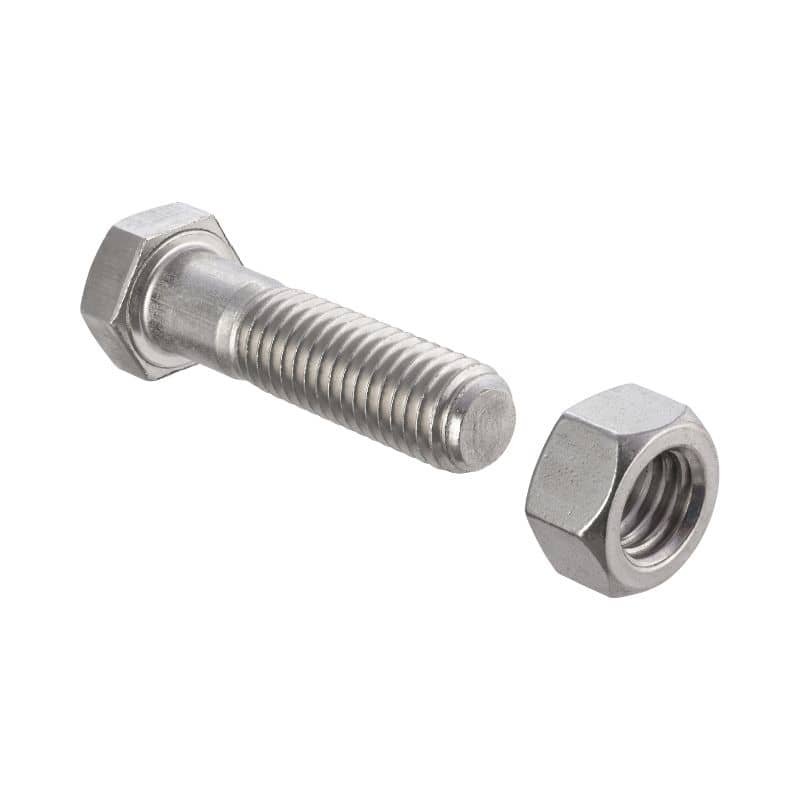
Alloy steel fasteners are engineered for strength and performance. Made from steel enhanced with alloying elements like chromium, molybdenum, and nickel, these fasteners are used in demanding applications such as oil & gas, heavy equipment, and high-temperature environments.
What Is Alloy Steel?
Alloy steel includes elements such as chromium, molybdenum, nickel, vanadium, and manganese. These enhance mechanical performance, toughness, and resistance to stress, heat, and fatigue. Alloy steel is classified into:
• Low-Alloy Steel (<8% alloying elements)
• High-Alloy Steel (>8% alloying elements)
Why Choose Alloy Steel Fasteners?
Advantages
- High strength and hardness
- Excellent fatigue resistance
- Heat and wear resistance
- Customizable via heat treatment
Limitations
- Low corrosion resistance (without coating)
- Higher material cost
- Requires coatings for most environments
Common Alloying Elements
| Element | Purpose / Benefit |
|---|---|
| Chromium | Hardness, wear and oxidation resistance |
| Molybdenum | High-temp and corrosion resistance |
| Nickel | Toughness, impact resistance |
| Vanadium | Grain refinement, strength |
| Boron | Hardenability |
| Manganese | Tensile strength, hardness |
Popular Grades of Alloy Steel Fasteners
| Grade | Description | Uses |
|---|---|---|
| ASTM A193 B7 | Cr-Mo steel, quenched & tempered | Pressure vessels, flanges |
| ASTM A574 | Alloy socket cap screws | Tooling, machinery |
| SAE Grade 8 | Heat-treated medium-carbon alloy | Structural & automotive |
| ISO 898 Class 10.9 | High tensile metric fasteners | Industrial & engineering |
| ASTM A490 | High-strength structural bolts | Bridges, high-rises |
Mechanical Properties
| Property | Typical Range |
|---|---|
| Tensile Strength | 690 – 1240 MPa |
| Yield Strength | 586 – 1100 MPa |
| Hardness | HRC 28 – 44 |
| Elongation | 10 – 15% |
| Elastic Modulus | ~200 GPa |
Heat Treatment
- Quenching & Tempering – boosts strength & toughness
- Carburizing – improves surface hardness
- Normalizing – refines structure
- Austempering – balances hardness & ductility
Surface Coatings
| Coating | Benefits |
|---|---|
| Zinc Plated | Economical, light-duty protection |
| Hot-Dip Galvanizing | Thick, durable outdoor protection |
| Phosphate Coating | Lubricity, rust prevention |
| Black Oxide | Appearance, mild resistance |
| Geomet/Dacromet | Salt-spray, eco-friendly |
| PTFE Coating | Low friction, chemical resistance |
Applications
- Automotive: engine, suspension, transmission
- Construction: beams, bolts, high-rises
- Oil & Gas: pressure vessels, rigs
- Machinery: mining, agriculture, robotics
- Energy & Aerospace: turbines, aircraft, wind towers
Alloy Steel vs. Other Materials
| Property | Alloy Steel | Carbon Steel | Stainless | Titanium |
|---|---|---|---|---|
| Tensile Strength | Very High | Moderate | High | High |
| Corrosion Resistance | Low (uncoated) | Low | Excellent | Excellent |
| Cost | Moderate | Low | High | Very High |
| Weight | Standard | Standard | Slightly Heavier | Very Light |
Standards & Specifications
- ASTM A193 / A194 – High temp applications
- ASTM A320 – Low temp alloy fasteners
- SAE J429 – Grades 5, 8
- ISO 898-1 – Metric classes 8.8, 10.9, 12.9
- NACE MR0175 – Oil and gas stress cracking resistance
Frequently Asked Questions (FAQs)
❓ Are alloy steel fasteners rust-proof?
No. They require coatings for corrosion resistance.
❓ What’s the strongest grade?
ISO 12.9 or ASTM A574 for socket cap screws.
❓Can they be used outdoors?
Yes, if properly coated (e.g., galvanized).
❓ Are they magnetic?
Yes, typically magnetic.
